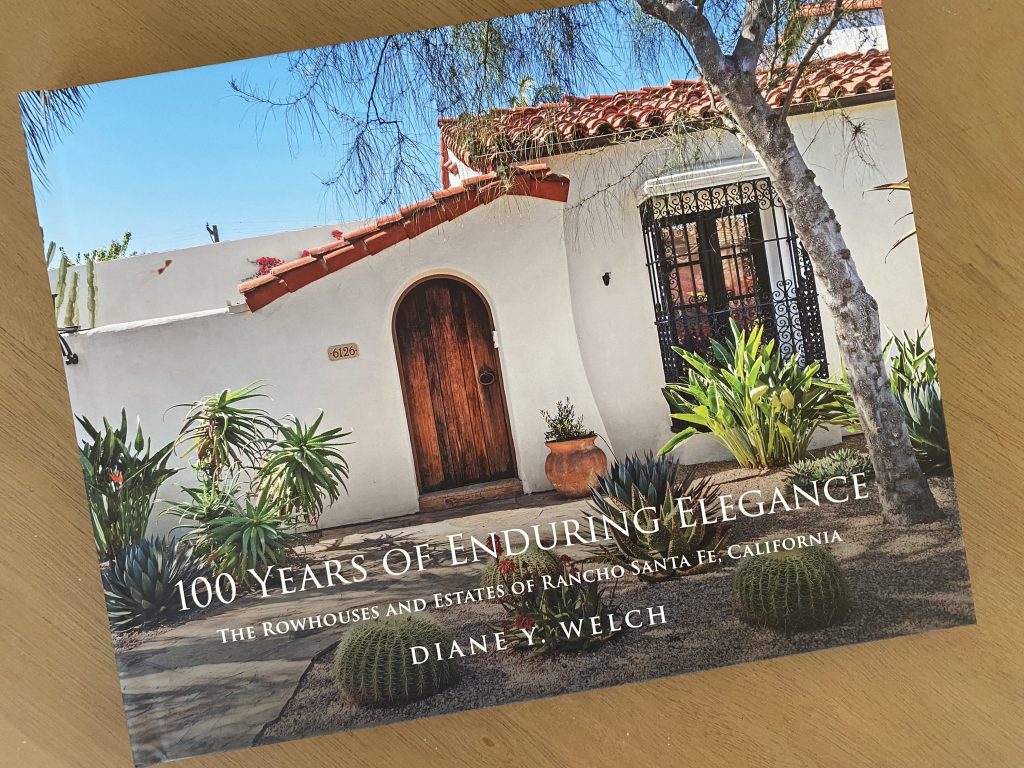
There is a particular kind of magic that happens when you push open a heavy wooden door on Paseo Delicias and find yourself standing unexpectedly in a hacienda centered around a sun-drenched courtyard. The street gives nothing away. The facade, modest and spare in the best possible sense, keeps its secrets. That, it turns out, was entirely the point.
Last weekend, a fortunate group of Rancho Santa Fe residents got to discover those secrets firsthand, as the Rancho Santa Fe Historical Society hosted a two-day book launch and rare walking tour of the four historic rowhouses at the heart of the village which are the very homes featured in author Diane Welch’s new book, 100 Years of Enduring Elegance: The Rowhouses and Estates of Southern California.
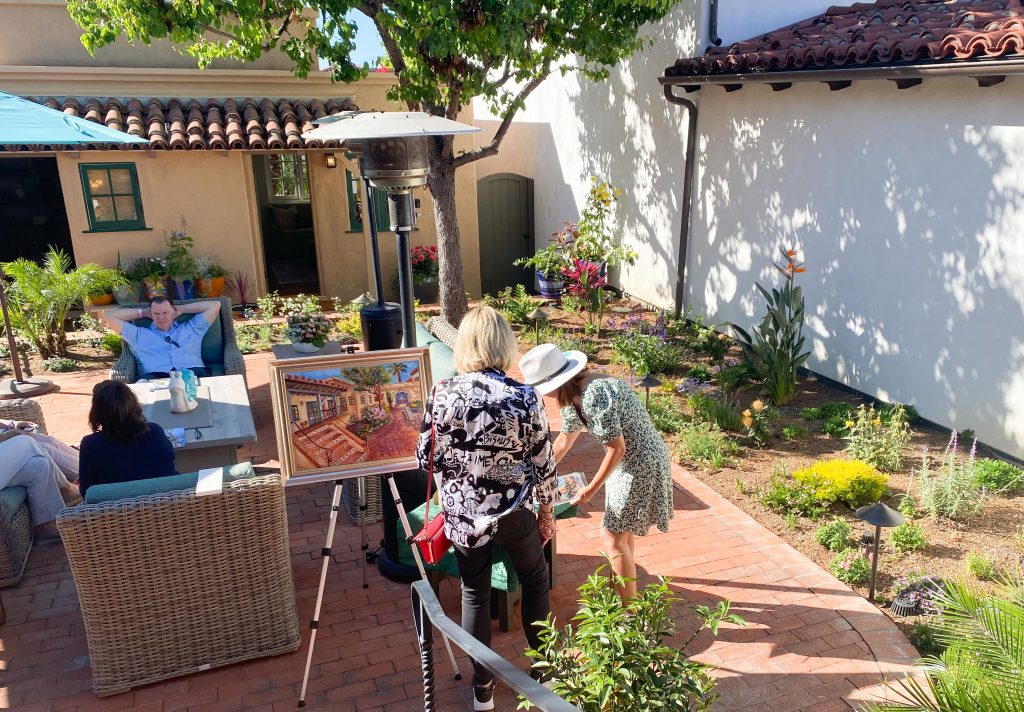
Welch, whose previous books explored the life and work of architect Lilian J. Rice, returns here to the village Rice built and the results are as meticulous and considered as the subject deserves. The weekend opened with a Friday evening VIP cocktail party and book signing at a magnificent Lilian Rice estate, where guests mingled over tray-passed bites and live music in the kind of outdoor courtyard that makes San Diego winters feel like a personal gift.
The following day belonged to the rowhouses themselves. Built along Paseo Delicias without side-yard setbacks, the four homes are connected like upscale Spanish bungalows, each one distinct yet unmistakably in harmony with its neighbors. Rice designed them as affordable, small-scaled model homes but also served as blueprints, in the most literal sense, for how new landowners should incorporate Latin elements in their new build.
Step through a heavy wooden door and the street disappears entirely. What opens before you is a sun-warmed courtyard, where wrought iron railings trace the stairways and decorative iron grilles offer tantalizing glimpses through the walls to the garden beyond. Spanish tile grounds it all. Cool underfoot, warm to the eye, and entirely at home in the California sun. The rooms that ring the courtyard are human-scaled in the best sense. Outdoor courtyards as the true heart of the home. The living spaces hidden, protected, revealed only to those invited in.
When designing the rowhouses, Rice was inspired by the walled villages of Spain, where the street facade is just a threshold. An invitation to look closer. In Southern California, with its year-round mild weather, those courtyards became something even more generous: genuine outdoor living rooms, places to gather and breathe and be. For East Coast and Midwest transplants arriving in the Golden State, it must have felt like being handed a different kind of life entirely.
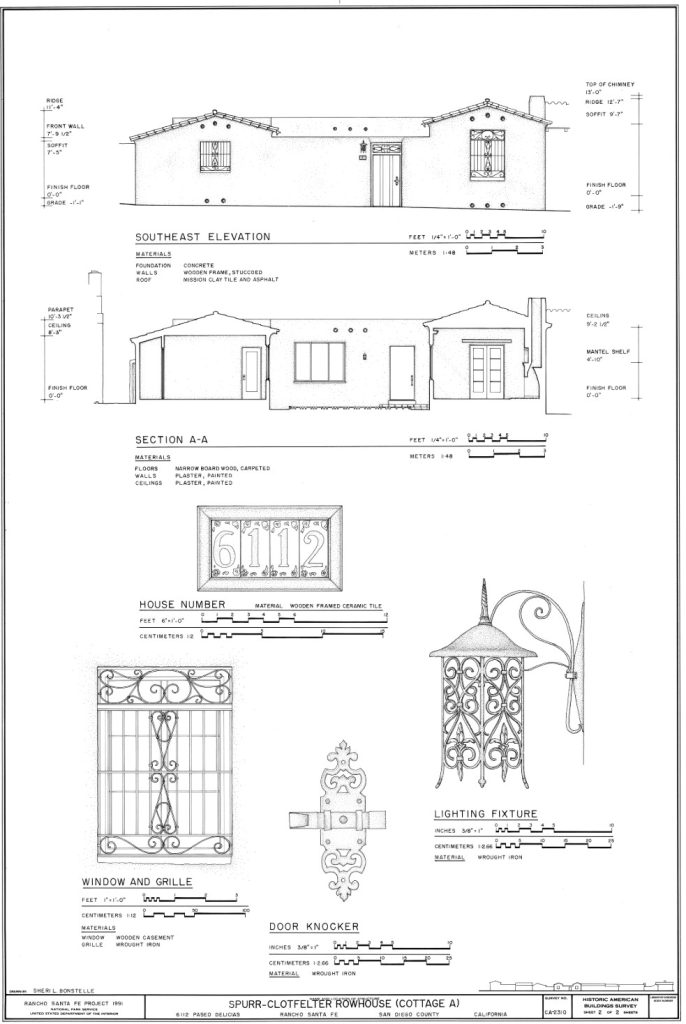
Of the four homes, one once owned by the Clotfelter family, holds the distinction of being listed on the National Register of Historic Places. When a family member sought to enlarge it, the Rancho Santa Fe Association Art Jury brought in a historic preservation consultant, who concluded that alterations would strip the home, and the community, of its historic significance. The expansion was denied. The home, now used as commercial offices, remains intact.
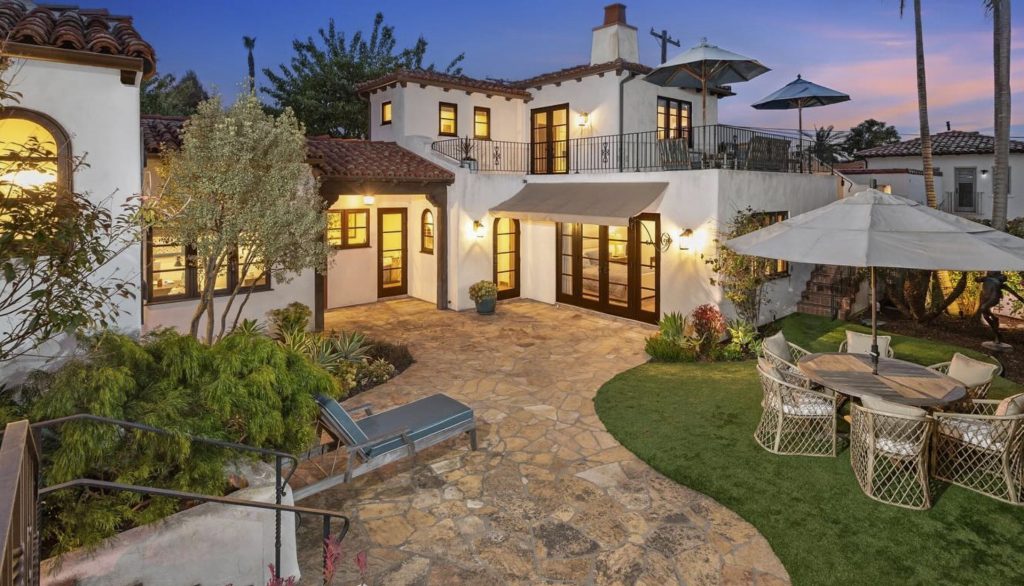
The other three rowhouses tell another story: carefully renovated, with original facades and street presence preserved, but expanded thoughtfully to the rear is proof that old bones and modern comfort are not mutually exclusive, so long as the hand doing the work is a judicious one.
Which is really the point of the tour, the book, and the weekend. Rancho Santa Fe was built to be beautiful on purpose. The courtyards that open the village’s commercial spaces to pedestrians, the single-story scale, the Spanish Revival details that reward a slow look. None of it was accidental. People paid, and continue to pay, handsomely to live inside that vision. The least we can do, as Welch’s book illustrates, is take care not to alter it out of existence.
100 Years of Enduring Elegance: The Rowhouses and Estates of Southern California is available at the Rancho Santa Fe Historical Society, 6036 La Flecha in Rancho Santa Fe.
Kelli Hillard is a Covenant resident and former Art Jury member.