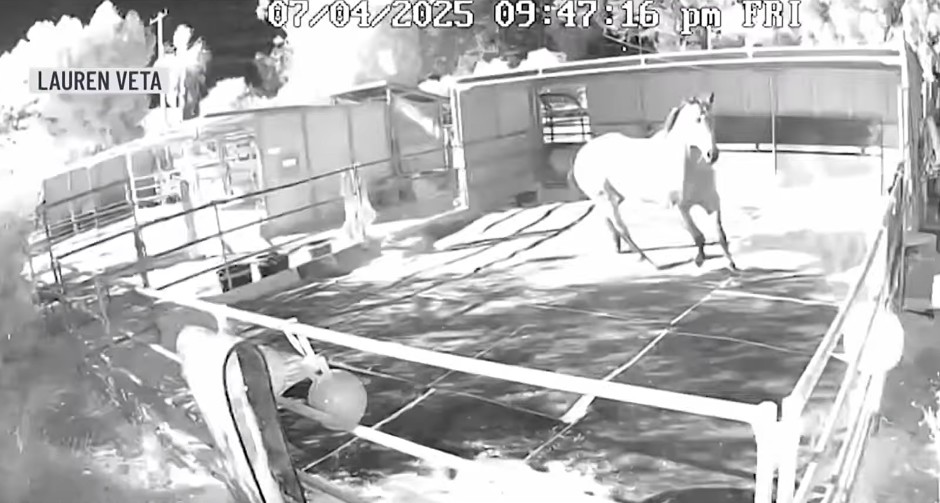
Every year, communities across the country celebrate July 4th with fireworks. But in Rancho Santa Fe – a place defined by its horses, open space, wildlife, and quiet rural character – fireworks carry risks that are immediate, predictable, and well-documented.
As part of the upcoming commemoration of the United States 250th anniversary of the signing of the Declaration of Independence, the Rancho Santa Fe Association Board directed staff in April to research options for a community 4th of July evening event at the golf course driving range, featuring a barbecue dinner followed by fireworks. It is a well-intentioned idea, and the spirit of celebration is one we all share. But before that plan moves forward, the community deserves an honest conversation about what fireworks actually mean for the horses, dogs, wildlife, and neighbors who call this place home.
When the Sky Explodes, the Barn Becomes a Danger Zone
Horses are prey animals with highly sensitive hearing and an instinctive flight response. Sudden explosions and flashes trigger panic: bolting, rearing, sweating, and crashing into fences or stall walls. In a survey of more than 1,200 horse owners, 8% reported injuries directly caused by fireworks – lacerations, broken limbs, and catastrophic trauma. Even stabled horses are not safe; one study found a third of long-term injuries occurred in stalls, where horses slip, collide with walls, or become cast.
Our family experienced this firsthand. Years ago, while showing at the National Horse Show at the Del Mar Fairgrounds, the evening air split open with the crack and boom of fireworks. The anxiety in the barn was immediate and severe. One of our horses nearly broke out of his stall – and in doing so, crashed into the barn door so violently that he cut his leg and required stitches and months to recover. Other horses in the barn had to be tranquilized just to keep them calm. We learned very quickly never to allow our horses anywhere near the fairgrounds on the Fourth of July. Fireworks and animals do not mix.
Owners trying to calm frightened horses face their own danger – being kicked, knocked over, or dragged. A single panicked horse can injure even an experienced handler.
The Damage Doesn’t Stop at the Barn Door
More than half of all dogs exhibit fear responses to fireworks – shaking, vomiting, destructive escape attempts, or running away. Animal shelters report a 30% spike in lost pets between July 4th and July 6th. For older dogs or those with heart or respiratory conditions, the stress can be life-threatening.
Wildlife pays a price as well. Birds abandon nests at night, leaving chicks to die of exposure. Flocks disoriented by explosions collide with trees and buildings. Small mammals flee burrows, abandoning their young.
Fireworks release toxic metal salts, perchlorates, and fine particulate matter that settle into soil and waterways – a serious concern in a community that values ecological health and relies on groundwater. In drought-prone Southern California, fireworks start nearly 20,000 fires nationwide each year. That risk cannot be ignored here.
This Is Not the Right Event for Our Community
Rancho Santa Fe is a rural, equestrian community where horses live in open barns, sound travels across canyons, wildlife corridors run through neighborhoods, and fire danger is constant. Fireworks may be traditional, but they are not compatible with the landscape, animals, and values that define this place.
The Rancho Santa Fe Association should not put on a fireworks display on July 4th. Let’s celebrate without putting our horses, dogs, wildlife, and neighbors at risk.
Julie Manion-Flores is an equestrian who boards her horses in Rancho Santa Fe.