People often ask why my family cares so deeply about the Protective Covenant.
The answer is really very simple. We’ve been part of Rancho Santa Fe almost since the beginning.
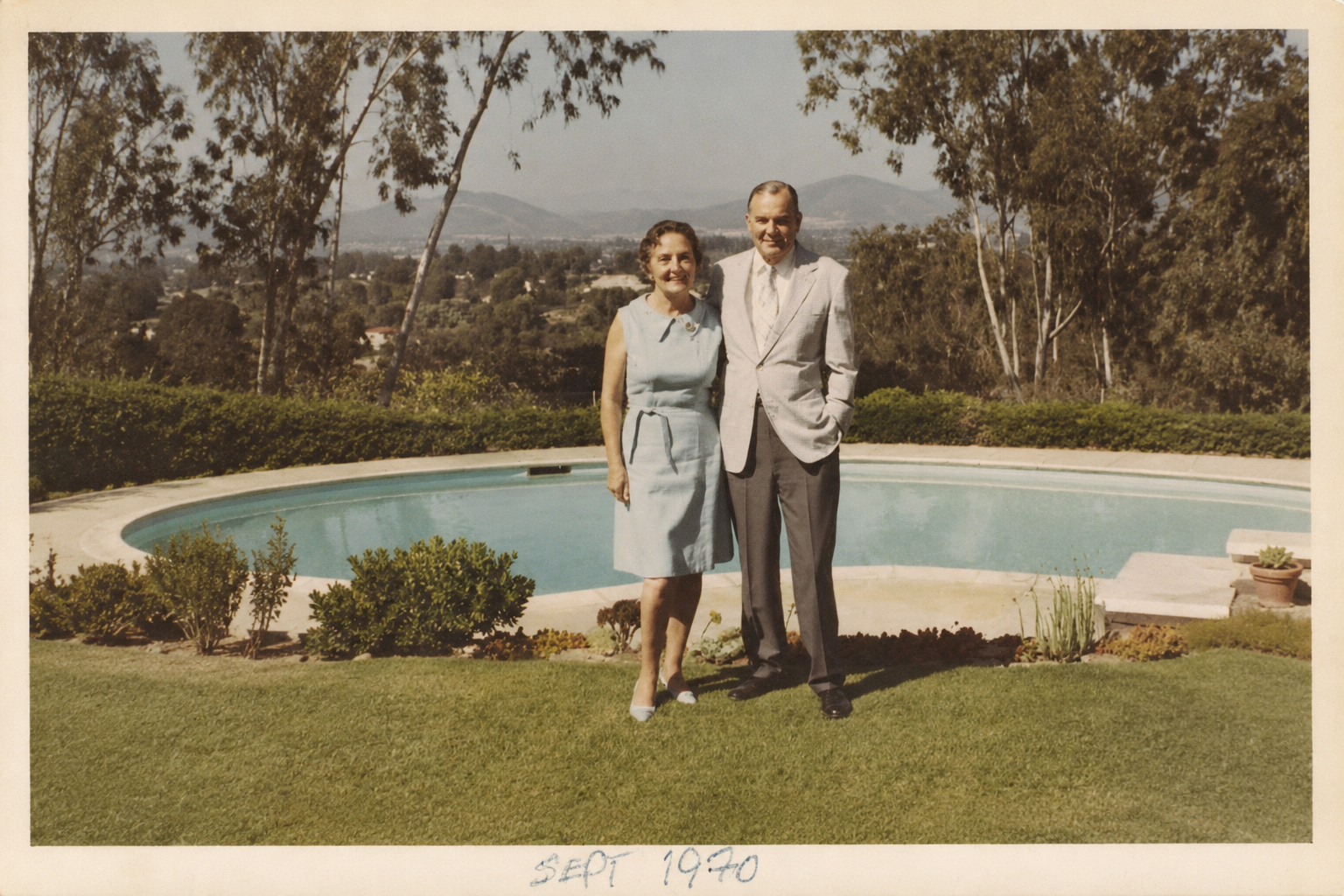
My family’s connection to the Ranch goes back nearly one hundred years. My great-uncle, U.T. Clotfelter, served as chief counsel for the Santa Fe Railroad and became deeply involved in Rancho Santa Fe during its formative years. My father, Reg Clotfelter, arrived here in 1931 to manage the Santa Fe Land Improvement Company and spent the rest of his life helping shape the community.
Their story is also the story of the Ranch itself.
People come here today because they see Rancho Santa Fe as a wonderful place to live. They don’t always see what they are trying to get away from. Then, after they buy and move here, some want to change the Ranch to make it more like the places they came from—or the places they otherwise didn’t like.
Many people assume Rancho Santa Fe simply appeared as the beautiful community we know today. It didn’t.
The Santa Fe Railroad had a vision that was pretty remarkable for its time. They weren’t simply selling lots. They were trying to create a carefully planned rural community where architecture, agriculture, open space, and the natural landscape would all work together under one governing document known as the Protective Covenant.
Then the Great Depression hit.
Land sales stalled. Financing collapsed. Properties had to be recovered. Even the golf course became part of the effort to rebuild what many feared might never succeed.
My great-uncle became deeply involved in pulling the pieces back together. The Depression had turned the whole project upside down. Properties had to be recovered, financing reorganized, and somehow the vision for Rancho Santa Fe had to survive. Once the Railroad was ready to begin again, it needed someone to oversee the next chapter.
That someone was my father.
Fresh out of UC Berkeley, my father was down in San Pedro selling fish to support his young wife and family during the Depression when my great-uncle called with an unexpected opportunity.
“Come to Rancho Santa Fe.”
My parents accepted.
They first lived in the Valencia Apartments next door to Lilian Rice while my father managed the Santa Fe Land Improvement Company from its Village office. Later they lived in the original Osuna Adobe before finally moving into one of the first row houses on Paseo Delicias. Looking back now, it’s hard to imagine living in so many places that have become part of Rancho Santa Fe history.
As the community grew, so did my father’s role in it.
He helped sell Rancho Santa Fe real estate, later managed The Inn at Rancho Santa Fe after it was purchased by George Richardson, and stayed involved in the community his entire life. Over those years he served on the Rancho Santa Fe Association Board more than anyone else in its history – not all at once, but over many years.
Growing up, I heard countless conversations about the Covenant.
To my father and the people who built this community, the Covenant wasn’t viewed as an obstacle to ownership. It was the reason people wanted to live here in the first place.
The Ranch wasn’t designed to maximize what each individual owner could build. It was designed to balance individual property rights with the shared responsibility of preserving the community’s rural character for everyone who chose to live here.
My father often reminded me that people who bought property here placed an enormous amount of trust in the Rancho Santa Fe Association Board and the Art Jury. They trusted them to understand the Covenant, to follow it, and to apply it fairly. The expectation was never that these bodies would substitute their own opinions about what seemed reasonable or desirable. Their responsibility was to faithfully follow both the words and the intent of the Protective Covenant – not personal preferences or the political winds of the day.
That philosophy is what made the Ranch different then, and I believe it is what still makes it different today.
Nearly a century has passed since my father first arrived. The avocado groves have largely given way to estates. Families have come and gone. New generations have made Rancho Santa Fe their home.
But the principles that guided its creation remain remarkably relevant.
Rancho Santa Fe didn’t become what it is by accident. It became what it is because generation after generation cared enough to protect it. That’s what my family tried to do, beginning almost one hundred years ago, and that’s what I hope future generations will continue to do.
Dick Clotfelter is a Covenant resident and former RSFA Board member.