Editor’s Note: This article was updated May 29 for additional clarity. See note below.
A 2009 California Court of Appeal decision – Rababy v. Rancho Santa Fe Association – is apparently being cited by the RSFA to justify skipping the community rezoning vote that our own board initiated less than two years ago for the proposed Gateway apartment project in the village. Covenant shareholders may like to know what that ruling actually says, because misinterpreting the Covenant’s land use designations by swapping the gas station amenity for rental apartments could dramatically alter the village landscape.
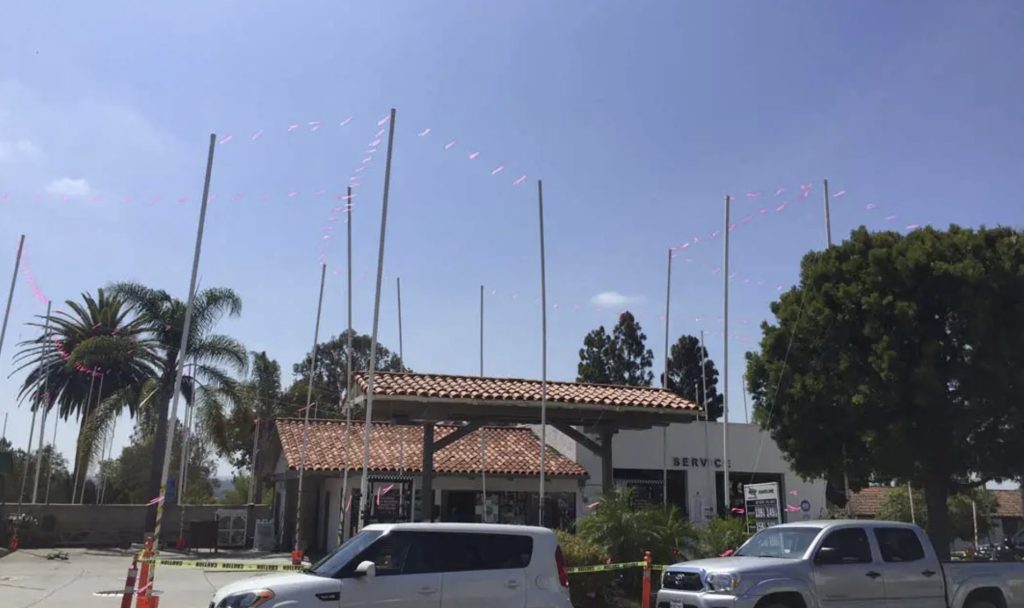
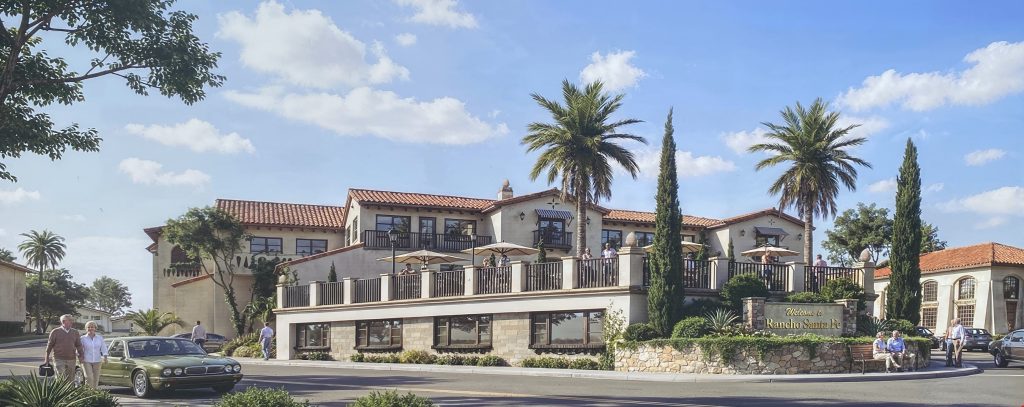
Landrock Development, who hold a ground lease on the the Rababy’s half-acre parcels where the gas station now stands, is proposing to replace it with two-story, 15-unit rental apartments including a 4,500 square foot subterranean retail space in the hopes of attracting a small grocer. The project will be reviewed by the Art Jury on Tuesday, June 2, at 9:30 a.m.
What Rababy vs. RSFA Actually Said
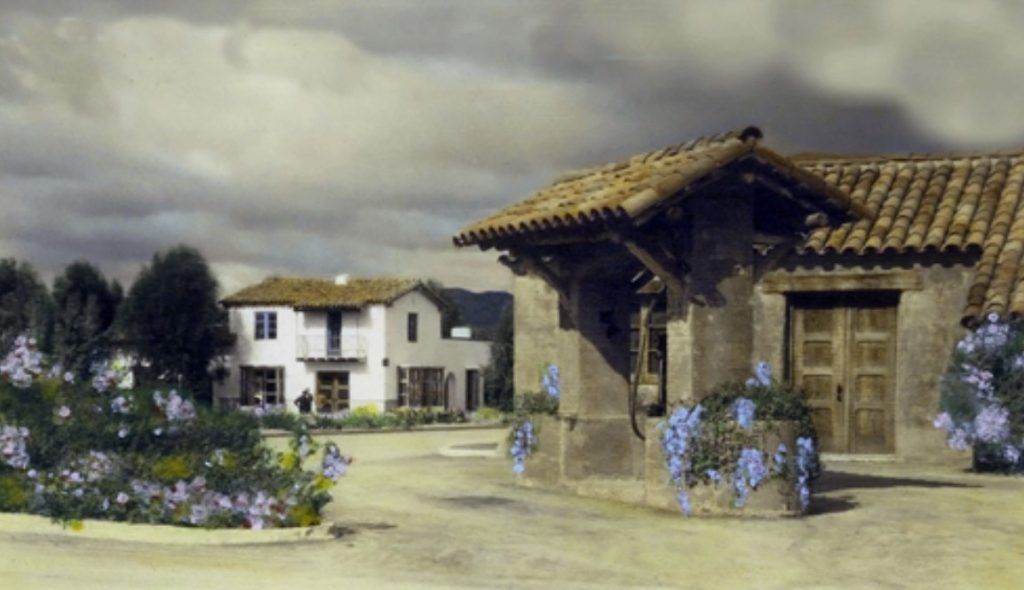
Adele and the late Tony Rababy have owned the triangular parcel at the entrance to the Village since the 1970s and operated a gas station there for decades. In the mid-2000s, a well-intentioned RSFA Board attempted to enforce a Class A residential restriction on the southern portion of the two-parcel property, after the Rababys tore down a historic Lilian Rice home on one of the two parcels. The home was standing on a Friday. By Monday, it was a heap of rubble.
According to an August 2006 Rancho Santa Fe Review article, both the community and the Association were shocked and dismayed by the overnight demolition. The article reported that “the Rababys had ‘no comment’ on why they took the action they did, or what their plans were for the property,” noting that they had previously sought permission to construct a two-story office building on the site.
The Board created a deed restriction saying that only another Class A, single family home could be built on that southern parcel. The Rababys argued that the Association was acting outside their authority in attempting to rezone the parcel.
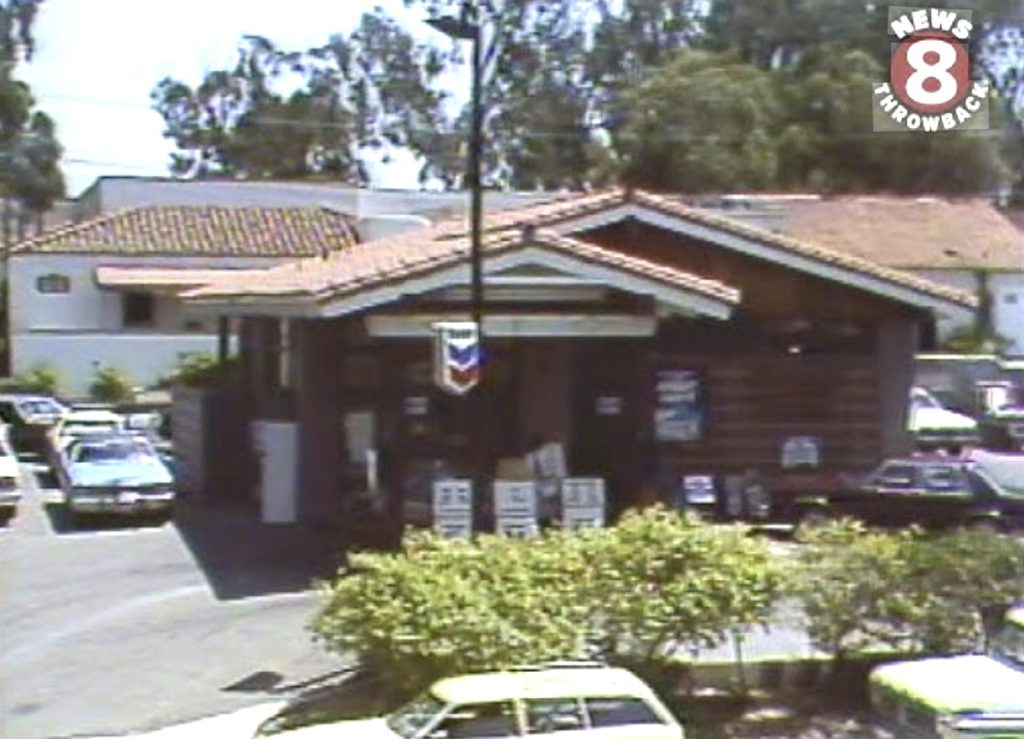
The court agreed with the Rababys – saying that the Association’s attempt to enforce a Class A single family residential restriction on a Class G zoned property surrounded by commercial uses was unreasonable. It removed the Board’s deed restriction and left the two parcels zoned as Commercial Class G.
The Inheritance You Can’t Claim
Referring to the original 1928 Protective Covenant (PC), the Court stated that “the designated use of the northern portion (gas station) of the subject property as Class G. That designation includes businesses listed in Class F general businesses, garages and dwellings plus material and wholesale businesses, but prohibits residential use.”
The Court was clear: the Gateway parcels are designated Class G – a zone that falls within the businesses listed in Class F, but explicitly prohibits residential use of any kind. The Protective Covenant states it plainly: “no building or structure shall be designed, erected, altered or maintained for any single or multiple dwelling, sleeping or human habitation purposes” – with only a narrow exception for a single watchman’s quarters.
Here’s the point: While encompassed in the wider class F zone which makes allowances for some dwellings, the Gateway parcels are defined as Class G. And while Class G does incorporate Class F’s permitted uses, the language immediately takes that residential permission back with its own explicit prohibition. The Covenant’s drafters essentially said: yes, Class G inherits Class F – but not the part about residential dwellings. That exception is carved out in plain language in Paragraph 106 of the PC and cannot be argued away.
Think of it like an estate where one heir receives everything except the house. You can’t claim the house just because it was part of the estate if the will stipulates otherwise. The Class G parcels have protective restrictions built in. In order to change them, a formal modification with the community’s consent is the legal path forward.
Which is precisely what the RSFA Board did in September 2023. They initiated a formal Protective Covenant (PC) modification to rezone the parcels to Class D, in line with the part of the village area which allows residences. The process includes ballots mailed to all property owners within 500 feet, a two-thirds supermajority required for approval, Art Jury review, board approval, all with the requisite public noticing period. It was exactly the kind of careful, community-driven process designed by the Covenant.
Public Amenities to Private Apartments
The zoning is certainly a potential problem. But what is being built on top of the two parcels is also worth scrutiny. In 2017, after five years of public hearings, the Board approved the project along with a Floor-Area-Ratio (FAR) variance, even though the high-density, two-story development exceeded what was otherwise allowed. In return, the project included 138 underground parking spaces (part of a deal the Board made with Landrock to help address the Village parking shortage), a dedicated market space (intended to replace the sorely missed grocery store), and open pedestrian courtyards in the Lilian Rice tradition to help soften the project’s two-story bulk and mass.
The deal was imperfect – two dissenting directors warned the market had no legal guarantee behind it – but the other five directors felt the trade-offs were worth it.
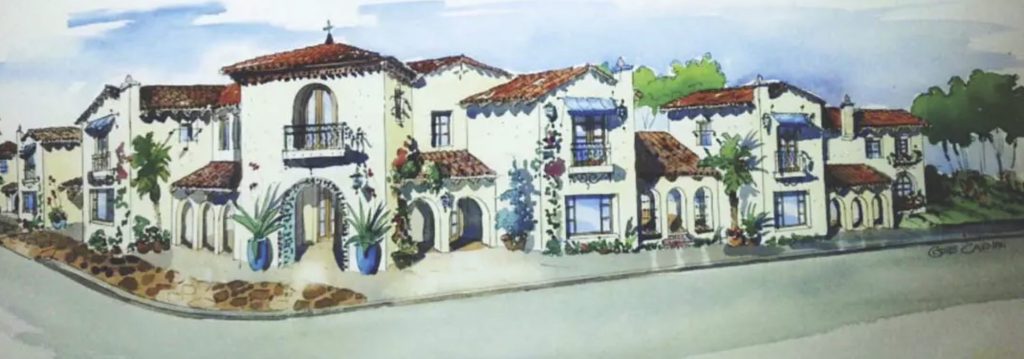
What is proposed today removes the trade-offs benefitting the community. The gas station is gone. Fifteen residential rental units are proposed instead of the previously approved offices and retail stores. The plan for 138 underground public parking stalls has been reduced to accommodate the apartment residents plus a handful of stalls for the unlikely grocer.
And then there is the “courtyard.” The original variance required an open pedestrian courtyard – a genuine public amenity designed to animate the village experience and minimize the building’s two-story bulk and mass. What is being counted toward that requirement today are private apartment patios and an upper-level terrace for the renters. A private patio is not a pedestrian courtyard. A private rooftop terrace is not a village corridor. The trade-offs from the 2017 approval have all but disappeared.
Another issue recently raised is the sheer disruption a project of this scale could bring to the Village during construction. Pete Smith, former RSFA manager and current property manager of Woolley Plaza, home to the Rancho Santa Fe Post Office, said he consulted with three commercial contractors to better understand how a project of this magnitude could affect traffic flow and nearby businesses.
“Because the structure extends nearly to the street on multiple sides, contractors told me that one lane of traffic would likely need to be closed on both Via De Santa Fe and La Granada to accommodate staging equipment and a construction crane,” Smith said. “The consensus was that construction would take between two and two-and-a-half years to complete, with roughly 100 workers on site during peak construction.”
Something Worth Building
No one who loves this Ranch is opposed to seeing something wonderful rise at the village gateway. That triangular parcel is one of the most significant sites in the Covenant – a rare chance to create something beautiful. Maybe even step-down housing – for purchase, not rent – where seniors who want to downsize yet stay in the Covenant could find a home.

Or imagine a curated market on La Flecha off an arcade in the Lilian Rice tradition. Shaded courtyards where neighbors actually stop and linger. Architecture that evokes the community squares of Spain – hand-laid tile, deep-set windows, plastered walls, and varying rooflines that simply belong. Certainly not the boxy compromises down the street that somehow slipped past the Art Jury in decades past, but something Rice herself might recognize as worthy of the community she designed.
That project is possible. It just needs some smart city planning, tasteful design, and a zoning change if required. The original planners who designed the Covenant were not naive. They knew that development pressure would come. They built in protections such as land use zoning and a clear process to alter it. Because they understood that without those protections, the character of Rancho Santa Fe would eventually be traded away in pieces, each one individually defensible, and cumulatively irreversible.
There is an irony buried in the Rababy’s story. Had the original Lilian Rice home not been demolished nearly twenty years ago, the property could have produced two decades of rental income and capital appreciation while preserving an existing village residence. Instead, a gamble on a larger redevelopment left one of the Covenant’s most prominent corners sitting vacant for nearly twenty years – where a village home stood before disappearing into rubble over a weekend.
Editor’s Note: A Covenant member has suggested that the 2009 Rababy ruling gives the Gateway applicant the right to choose between Class F or Class G zoning. But the appellate ruling appears narrower than that.
While the trial judge stated that use of the property as either Class F or Class G “would be reasonable,” the California Court of Appeal – the higher court reviewing the case – specifically wrote: “We affirm the judgment of the trial court, not the rationale.”
This means the appeals court agreed that the Class A residential restriction could no longer be enforced on that parcel under those circumstances. It did not hold that a property owner may choose among competing zoning clasifications, nor did it establish a general rule that applicants may determine the zoning class.
The 2009 ruling invalidated enforcement of the Class A restriction. Under the Protective Covenant, the interpretation and application of zoning classifications remains governed by the Association and Art Jury – not the applicant.
This article draws in part from the published opinion in Rababy v. Rancho Santa Fe Association, California Court of Appeal, Fourth District (D054337, December 21, 2009), as well as reporting published in the Rancho Santa Fe Review Weekly on August 31, 2006.
Kelli Hillard is a Covenant resident and former member of the Art Jury.